


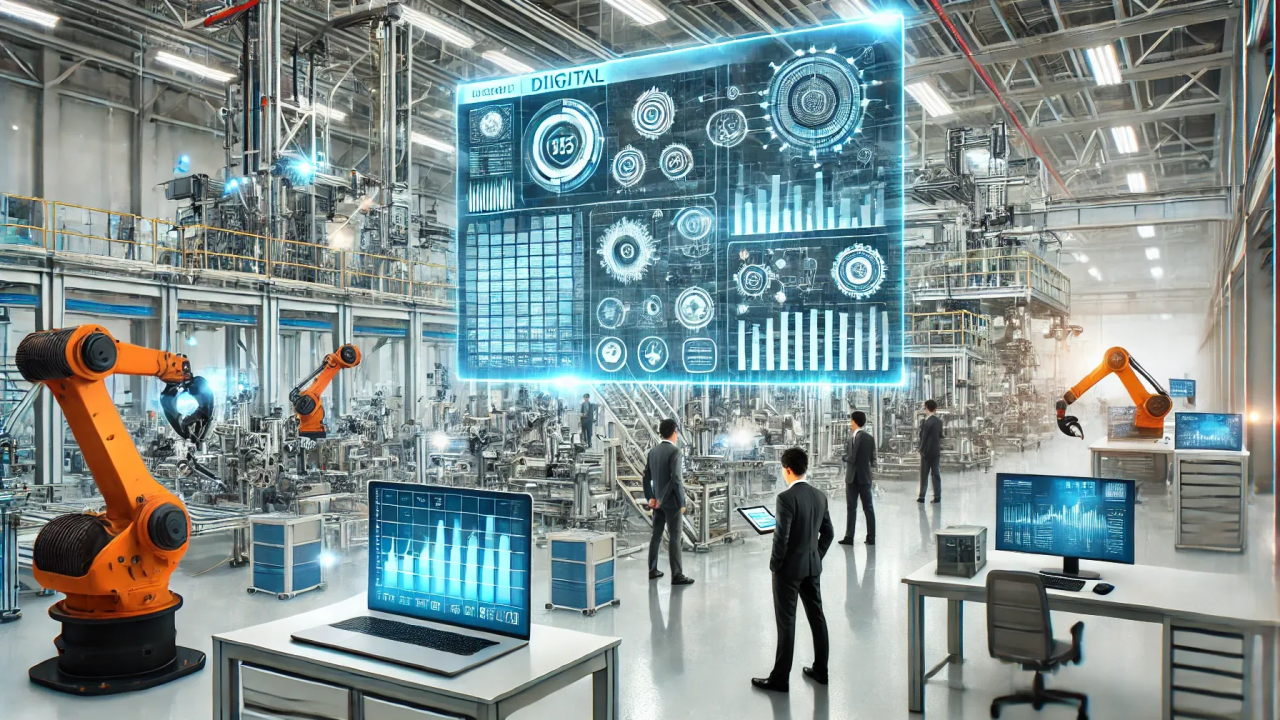
Manufacturing organizations are under constant pressure to increase efficiency, reduce downtime, improve forecasting accuracy, and respond quickly to market demand shifts. Traditional production planning methods often rely on static models, historical assumptions, and limited real-time visibility. As production environments become more complex, these approaches are no longer sufficient.
Digital twins are transforming how companies plan, simulate, and optimize production processes. A digital twin is a dynamic virtual representation of a physical system, continuously updated with real-time data. In production planning, digital twins enable manufacturers to test decisions before implementing them on the factory floor.
This capability allows organizations to reduce risk, improve scheduling accuracy, and align operations with business goals more effectively than ever before.
What Digital Twins Mean in Production Planning
A digital twin in production planning is a virtual model that mirrors physical manufacturing assets, workflows, or entire facilities. It reflects actual operational conditions through continuous data integration from sensors, machines, and enterprise systems.
Unlike traditional simulations that rely on fixed assumptions, digital twins evolve as conditions change.
They can represent:
- individual machines
- production lines
- factory layouts
- logistics systems
- supply chain interactions
This live connection between physical and digital environments supports better decision-making across planning stages.
Production teams can evaluate scenarios quickly without disrupting ongoing operations.
How Digital Twins Improve Planning Accuracy
Production planning depends heavily on predicting outcomes. Inaccurate assumptions can lead to delays, inventory problems, or inefficient resource allocation.
Digital twins improve planning accuracy by enabling scenario testing based on real operational data.
Examples include:
- testing alternative scheduling sequences
- evaluating workforce allocation strategies
- simulating equipment utilization levels
- forecasting maintenance requirements
- analyzing production bottlenecks
Instead of relying solely on historical performance, planners use current conditions to guide decisions.
This shift improves reliability across planning cycles.
The Role of Real-Time Data in Digital Twin Environments
Real-time data is the foundation of digital twin performance.
Sensors installed across manufacturing systems continuously provide information about:
- machine performance
- temperature conditions
- vibration levels
- production throughput
- energy consumption
- quality indicators
These inputs allow digital twins to reflect actual operating conditions instead of theoretical estimates.
As conditions change, the digital twin adjusts automatically.
Production planners can respond faster because they see what is happening now rather than what happened yesterday.
Supporting Scenario Simulation and Risk Reduction
One of the most valuable advantages of digital twins is the ability to simulate production scenarios before implementing changes physically.
Manufacturers can explore questions such as:
- What happens if demand increases suddenly
- How equipment failure affects scheduling
- Whether staffing changes improve output
- How layout adjustments influence workflow efficiency
Simulation reduces uncertainty.
Instead of reacting after disruptions occur, planners evaluate alternatives in advance.
This reduces operational risk and improves decision confidence.
Enhancing Production Scheduling With Digital Twins
Production scheduling is often affected by unexpected disruptions.
Machine breakdowns, supply delays, or workforce availability changes can shift timelines quickly.
Digital twins improve scheduling performance by enabling planners to adjust schedules dynamically.
Key scheduling benefits include:
- improved sequencing decisions
- better capacity utilization
- faster response to disruptions
- reduced idle machine time
- optimized workforce deployment
Because the digital twin reflects real-time conditions, scheduling adjustments remain aligned with operational realities.
This increases reliability across production cycles.
Digital Twins and Predictive Maintenance Planning
Maintenance planning plays a critical role in production continuity.
Unexpected equipment failures create delays and increase costs.
Digital twins support predictive maintenance by analyzing machine behavior patterns and identifying early warning signals.
For example:
If vibration levels increase beyond expected thresholds, the digital twin can alert planners before failure occurs.
This allows maintenance teams to schedule interventions proactively.
Predictive maintenance improves:
- equipment lifespan
- production continuity
- maintenance scheduling accuracy
- spare parts planning
- operational reliability
Production planners benefit because they can integrate maintenance timing into scheduling decisions more effectively.
Improving Resource Allocation Across Production Systems
Efficient resource allocation ensures machines, labor, and materials are used effectively.
Digital twins help planners evaluate how resources interact across production workflows.
They support decisions such as:
- assigning operators to critical stations
- balancing workloads across shifts
- optimizing raw material movement
- adjusting storage capacity utilization
- improving energy consumption planning
Better allocation reduces waste and improves throughput consistency.
Digital twins provide visibility that traditional spreadsheets cannot deliver.
Supporting Layout Optimization and Facility Design
Production planning often involves evaluating facility layouts.
Changing layouts physically can be expensive and disruptive.
Digital twins allow planners to test layout alternatives virtually before implementation.
Examples include:
- adjusting workstation positions
- improving material flow paths
- reducing transportation distances
- reorganizing storage areas
- testing automation integration scenarios
Layout simulations improve efficiency while reducing implementation risk.
Organizations avoid costly trial-and-error approaches on the factory floor.
Integrating Supply Chain Data Into Production Planning
Production planning does not operate in isolation.
Supply chain disruptions frequently affect manufacturing schedules.
Digital twins integrate upstream and downstream data sources to improve coordination.
They support:
- supplier delivery forecasting
- inventory level monitoring
- logistics scheduling alignment
- transportation timing adjustments
- demand variability analysis
This integration strengthens collaboration between planning teams and supply chain partners.
As a result, production schedules become more resilient.
Improving Collaboration Across Planning Teams
Production planning often involves multiple departments working together.
Engineering, operations, logistics, and maintenance teams must coordinate decisions carefully.
Digital twins create shared visibility across departments.
Instead of relying on disconnected reports, teams access a unified operational model.
This improves:
- communication accuracy
- planning transparency
- coordination speed
- cross-functional alignment
- decision consistency
Better collaboration strengthens planning outcomes across the organization.
Digital Twins and Energy Efficiency Planning
Energy consumption is becoming an increasingly important consideration in production planning.
Digital twins help organizations evaluate how operational decisions affect energy usage.
Examples include:
- comparing machine operating schedules
- analyzing peak consumption periods
- optimizing equipment utilization timing
- evaluating energy-efficient layout adjustments
Reducing energy consumption improves sustainability performance and lowers operating costs.
Digital twins support both objectives simultaneously.
Supporting Workforce Planning and Training
Workforce planning is another area where digital twins provide value.
Organizations can simulate staffing scenarios before implementing changes.
Examples include:
- evaluating shift adjustments
- testing operator allocation strategies
- analyzing workload distribution
- identifying training needs
Digital twins also support training environments.
Employees can interact with virtual production systems before working with physical equipment.
This improves safety readiness and skill development.
Digital Twins and Quality Control Optimization
Quality performance directly affects production planning reliability.
Defects create rework delays and reduce throughput.
Digital twins help planners analyze how production variables influence quality outcomes.
For example:
Planners can evaluate whether:
- temperature variations affect output consistency
- machine settings influence defect rates
- workflow changes improve inspection timing
Improved quality planning strengthens production stability.
Organizations reduce variability across manufacturing cycles.
Challenges in Implementing Digital Twins for Production Planning
Although digital twins offer strong advantages, implementation requires preparation and coordination.
Common challenges include:
Data integration complexity
Connecting machines, sensors, and planning systems requires technical alignment.
System compatibility requirements
Legacy equipment may require upgrades to support real-time data exchange.
Workforce training needs
Employees must understand how to interpret simulation outputs effectively.
Investment planning considerations
Initial deployment requires infrastructure and platform selection decisions.
Organizations that address these challenges early achieve faster implementation success.
The Role of Artificial Intelligence in Digital Twin Planning Systems
Artificial intelligence enhances digital twin performance by supporting predictive analysis and automated recommendations.
AI-driven digital twins can:
- forecast production disruptions
- recommend scheduling adjustments
- detect performance anomalies
- optimize workflow sequences
- evaluate demand variability scenarios
These capabilities increase planning accuracy and responsiveness.
AI transforms digital twins from visualization tools into decision-support systems.
Future Trends in Digital Twins for Production Planning
Digital twin technology continues evolving rapidly.
Future developments are expected to include:
- deeper integration with enterprise planning systems
- improved simulation speed and scalability
- expanded supply chain synchronization capabilities
- enhanced visualization environments
- stronger predictive analytics performance
As digital twins mature, production planning will become more adaptive and data-driven.
Organizations adopting these technologies early gain operational advantages.
Frequently Asked Questions
How do digital twins differ from traditional production simulations
Traditional simulations rely on static assumptions, while digital twins update continuously using real-time operational data.
Can small manufacturers benefit from digital twin planning tools
Yes. Scaled digital twin solutions allow smaller manufacturers to improve scheduling accuracy, resource allocation, and maintenance planning without large infrastructure investments.
What types of industries use digital twins for production planning
Industries such as automotive manufacturing, aerospace, electronics production, pharmaceuticals, and energy systems use digital twins extensively.
How long does it typically take to implement a production digital twin
Implementation timelines vary depending on system complexity, data availability, and integration requirements, but phased deployment strategies often accelerate adoption.
Do digital twins replace human decision-making in production planning
No. Digital twins support planners by providing insights and simulations, but human expertise remains essential for interpreting results and making strategic decisions.
Can digital twins improve sustainability performance in manufacturing
Yes. Digital twins help organizations analyze energy consumption, material usage efficiency, and workflow optimization opportunities that support sustainability goals.
Are digital twins compatible with existing manufacturing execution systems
Many modern digital twin platforms integrate with manufacturing execution systems, allowing organizations to enhance existing infrastructure rather than replace it entirely.

Comments are closed.